






 Buy in Bulkand Save Big
 Shipping to all Statesto Meet our Customer Needs


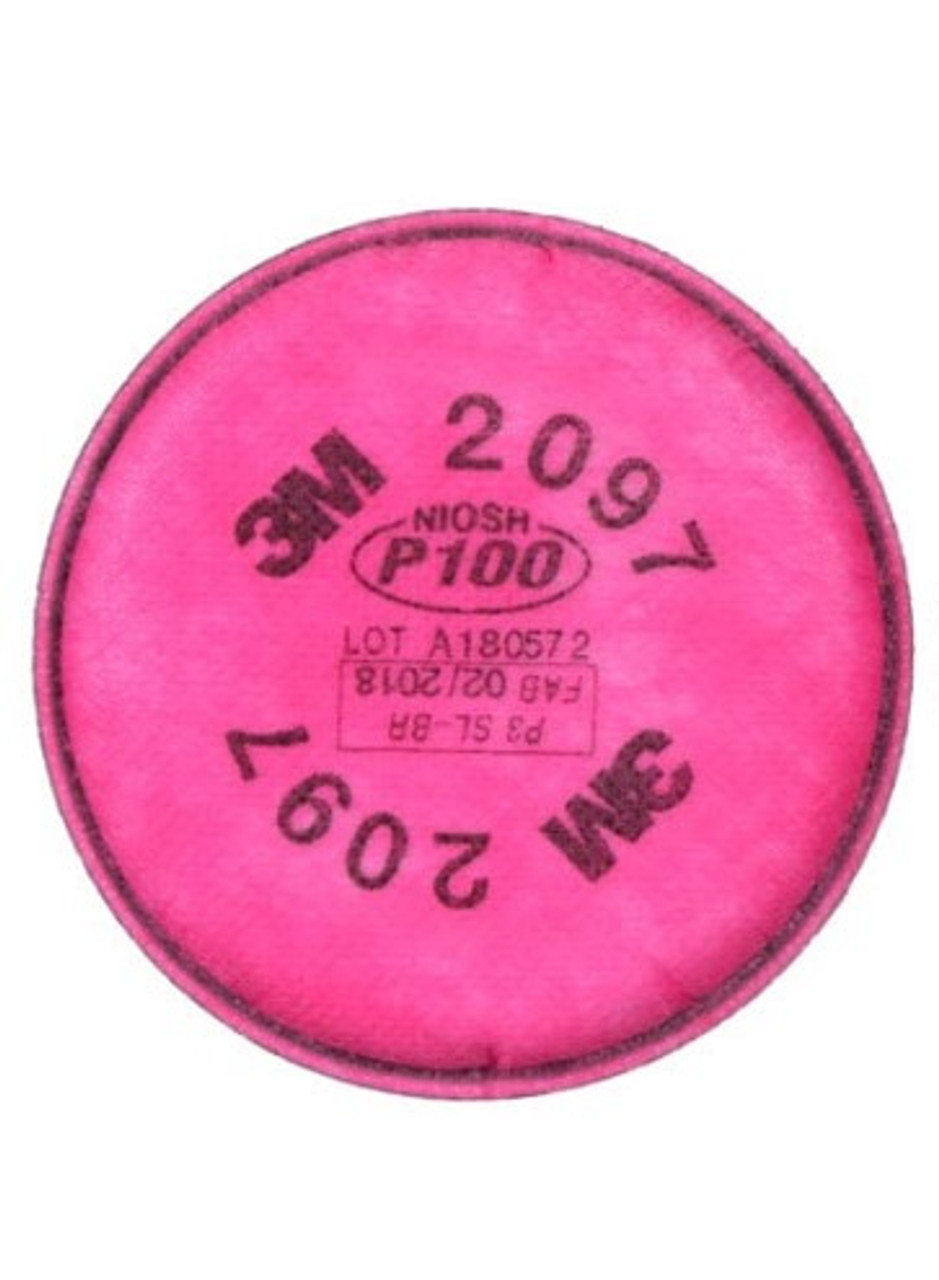
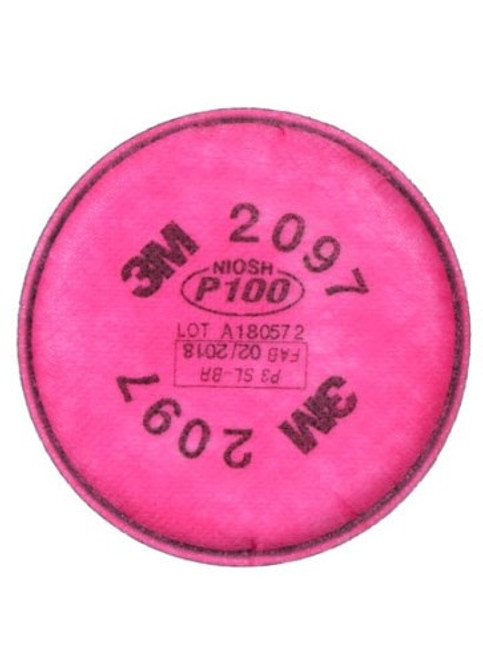
3M 2097 P100 Particulate Filter For 6000 and 7000 Series Respirators
3M
3M 2097 P100 Particulate Filter For 6000 and 7000 Series Respirators
Was:
$17.15
Now:
$16.39
- 3M-2097-Pair





You May Also Like
$16.39 - $569.00

$13.59 - $414.00

$16.39 - $569.00

$13.59 - $414.00

3M 2097 P100 Particulate Filter For 6000 and 7000 Series Respirators
P100 particulate filter helps provide respiratory protection in environments containing certain oil and non-oil based particles. 3M recommended for nuisance level organic vapor relief. Use with 3M Half and Full Facepieces according to NIOSH approvals. Nuisance level relief from organic vapors. Nuisance level refers to concentrations not exceeding OSHA PEL or other applicable government occupational exposure limit, whichever is lower. Use with 3M Reusable Respirators 5000 Series or 3M Cartridge 6000 Series with 3M Adapter 502, 3M Respirators 6000, 7000 and FF-400 Series with bayonet filter holders. Filters can be used in a wide range of applications, including: welding, brazing, torch cutting, metal pouring, soldering, and exposure to lead, asbestos, cadmium, arsenic and MDA for concentrations up to 10 times the Permissible Exposure Limit (PEL) with half facepiece respirators or 50 times PEL with full facepiece respirators. Full facepieces must be quantitatively fit tested to claim assigned protection factor above 10 in negative pressure mode.
Features and Specs:
- NIOSH-approved P100 particulate filter
- Exceptional 99.97% filter efficiency meets NIOSH P100-series test criteria
- Versatile protection against many oil and non-oil based particulate contaminants
- Nuisance odor relief for organic vapor levels below the Permissible Exposure Level (PEL)
- Bayonet compatibility allows use with many 3M™ half and full facepiece designs
For industrial/occupational use only. Not for consumer sale or use
Disclaimer: 3M industrial and occupational products are intended, labeled, and packaged for sale to trained industrial and occupational customers for workplace use. Unless specifically stated otherwise on the applicable product packaging or literature, these products are not intended, labeled, or packaged for sale to or use by consumers (e.g., for home, personal, primary or secondary school, recreational/sporting, or other uses not described in the applicable product packaging or literature), and must be selected and used in compliance with applicable health and safety regulations and standards (e.g., U.S. OSHA, ANSI), as well as all product literature, user instructions, warnings, and other limitations, and the user must take any action required under any recall, field action, or other product use notice. Misuse of 3M industrial and occupational products may result in injury, sickness, death, or property damage. For help with product selection and use, consult your on-site safety professional, industrial hygienist, or other subject matter expert. For additional product information, visit www.3M.com.
Frequently Asked Questions
Is the 3M 2097 P100 filter a good choice for welding and metalwork where there are both particulates and light odors?
Yes. The 3M 2097 is a P100 particulate filter (captures at least 99.97% of oil and non-oil airborne particles) that also adds nuisance-level organic vapor relief, making it well suited to welding, brazing, torch cutting, soldering and metal pouring where metal fumes come with low, below-PEL odors. 3M and the listing cite it for exposure to lead, asbestos, cadmium, arsenic, MDA, silica and mold. It is NIOSH approved, flame resistant, and uses a bayonet connection that fits many 3M reusable half and full facepieces. Important: the organic-vapor feature is only nuisance-level odor relief and does not replace a chemical cartridge for hazardous vapor concentrations.
What does the P100 rating on the 3M 2097 filter mean?
P100 is the highest NIOSH particulate filter class: it removes at least 99.97% of airborne particles, and the "P" means it is oil-Proof (effective against both oil-based and non-oil-based aerosols). The 3M 2097 passed NIOSH's P-series test criteria and carries the NIOSH-assigned color code magenta, which identifies P100 filters. This makes it a high-efficiency particulate filter for dusts, mists, fumes, asbestos, silica and mold — with the added benefit of nuisance-level organic vapor relief.
What does "nuisance level organic vapor relief" mean on the 3M 2097 filter?
It means the 3M 2097 provides relief from low, bothersome odors of organic vapor — but only at concentrations that do not exceed the OSHA Permissible Exposure Limit (PEL), or the applicable limit, whichever is lower. This is a comfort feature layered on top of the P100 particulate filter, not respiratory protection against gases or vapors. If organic vapor concentrations reach or exceed the PEL, you must use a proper 3M organic vapor chemical cartridge instead — the 2097 is not approved for hazardous vapor levels or for IDLH atmospheres.
Which 3M respirators is the 2097 filter compatible with, and how do you install it?
The 3M 2097 uses a bayonet-style connection and fits 3M bayonet reusable respirators, including the 3M Half Facepiece 6000 Series, Rugged Comfort 6500 Series and 7500 Series, the Full Facepiece 6000 Series, FF-400 Series and 7800S Series, and the 3M Scott AV-3000 HT and AV-3000 SureSeal facepieces (with the AV-632 bayonet adapter). Per the ISP listing, with the 3M Adapter 502 it can also be used on 3M 5000 Series facepieces or 6000 Series cartridges. Installation is a simple quarter-turn twist to lock into place, and filters are used in pairs — one on each side.
How much protection does the 3M 2097 provide — what exposure levels can it be used up to?
The 3M 2097 is NIOSH approved to help reduce particulate exposure up to 10 times the OSHA Permissible Exposure Limit (PEL) on a half facepiece, and up to 50 times the PEL on a quantitatively fit-tested full facepiece. It must not be used in atmospheres that are immediately dangerous to life or health (IDLH), oxygen-deficient, or above these concentrations. As an air-purifying particulate filter it removes particles only (plus nuisance-level organic vapor odor relief); it does not supply oxygen or provide protection against hazardous gas or vapor concentrations.
What is Advanced Electret Media (AEM) in the 3M 2097 filter?
Advanced Electret Media (AEM) is the electrostatically charged filtration media used in the 3M 2097. The static charge attracts and captures airborne particles while keeping the media lightweight and open, which gives the filter low breathing resistance and easy-breathing comfort without sacrificing its 99.97% P100 efficiency. Combined with the filter's slim, low-profile shape, AEM helps balance high particulate capture with all-day wearer comfort.
What is the difference between the 3M 2097 and the 3M 2091 filter?
Both are 3M bayonet P100 particulate filters (99.97% efficiency, oil and non-oil) that fit the same 6000, 6500, 7500, FF-400 and 7800S facepieces and protect against particulates like lead, asbestos, silica and mold. The key difference is that the 2091 is particulate-only, while the 2097 adds nuisance-level organic vapor relief for jobs like welding where low, below-PEL odors are present. Choose the 2091 for pure particulate protection; choose the 2097 if you also want nuisance-level organic vapor odor relief. Neither replaces a proper chemical cartridge for hazardous gas or vapor concentrations.
What contaminants does the 3M 2097 filter protect against?
The 3M 2097 is NIOSH approved to filter oil-based and non-oil-based airborne particulates at 99.97% efficiency, including dusts, mists, fumes, lead, asbestos, cadmium, arsenic, MDA, silica and mold. On top of that it adds nuisance-level organic vapor relief for low odors below the OSHA PEL. It is still fundamentally a particulate filter — for hazardous gas or vapor concentrations you need a chemical cartridge (or a combination cartridge). It must not be used in IDLH (immediately dangerous to life or health) atmospheres.
Can the 3M 2097 filter be used in confined spaces or oxygen-deficient environments?
No. The 3M 2097 is an air-purifying particulate filter, not a supplied-air system — it removes particles from breathable air but does not supply oxygen. It must not be used in atmospheres that are immediately dangerous to life or health (IDLH), oxygen-deficient (below 19.5%), unknown, or where particulate concentrations exceed its approved limits (10x PEL on a half mask, 50x PEL on a fit-tested full mask). Its nuisance-level organic vapor relief does not change this. It is for industrial/occupational use only, as part of a complete respiratory protection program.
How do you know when to replace the 3M 2097 filter?
Replace the 3M 2097 when it becomes dirty, damaged, or difficult to breathe through — those are the signs the particulate media is loaded. Because the particulate portion is a mechanical/electret filter, increasing breathing resistance is the main change-out indicator. If you begin to notice the organic vapor odor (odor breakthrough), that also means the filter should be replaced. Inspect the filter before each use for tears, dents or a compromised seal, and follow your worksite's respiratory protection program and 3M's guidance.
Is the 3M 2097 sold in pairs, and where can I buy it?
The 3M 2097 is available at Industrial Safety Products (industrialsafetyproducts.com) and is sold by the pair, with a larger bulk pack (50 pairs) also offered, and free shipping. Filters are used two at a time — one on each side of the facepiece — so buying by the pair matches how they are installed. It ships as an add-on filter that snaps onto compatible 3M bayonet respirators; the facepiece is purchased separately.